
Evidence of Use Analysis for Licensing and Enforcement
Turn Patent Assets into Commercial OpportunitiesIdentify Products and Technologies that potentially practice Patented Inventions to support Licensing, Monetization, Enforcement, and Portfolio Value creation.
Trusted by Law Firms, Corporations, Startups,
Universities, and R&D Organizations Across Global Markets
Identify Commercial Opportunities Hidden Within Patent Portfolios
Evidence of Use (EoU) Analysis helps patent owners identify products, systems, and technologies that potentially practice patented inventions. Origiin’s Evidence of Use Analysis Services combine claim chart preparation, patent claim mapping, technical evidence collection, and product analysis to support patent licensing, patent monetization, patent enforcement, and litigation readiness. Our studies help organizations maximize the commercial value of intellectual property assets and identify potential licensing opportunities.
Benefits of Evidence of Use Analysis
✔ Identify potential licensing targets
✔ Support patent monetization initiatives
✔ Strengthen patent enforcement strategies
✔ Build evidence for litigation and negotiations
✔ Evaluate commercial value of patent portfolios
✔ Support due diligence and investment decisions
Request an Evidence of Use Analysis
Discover where your patented technology may be used and unlock opportunities for licensing, enforcement, and commercialization.

What is Evidence of Use (EoU) Analysis?
Evidence of Use (EoU) Analysis is a structured investigation that examines whether a commercial product, service, platform, process, or technology potentially practices one or more claims of a patent.
The objective is to identify publicly available evidence that demonstrates a relationship between:
Patent Claims
and
Product Features or Functionalities
An EoU study typically involves:
- Reviewing patent claims
- Analyzing product functionality
- Gathering publicly available evidence
- Mapping product features to claim elements
- Preparing documentation that supports licensing or enforcement efforts
Evidence of Use analyses are widely used by:
- Patent owners
- Licensing professionals
- Patent monetization firms
- Litigation teams
- Law firms
- Corporate IP departments
- Investors and patent portfolio buyers
Why Evidence of Use Analysis Matters
Many patents remain underutilized because patent owners lack visibility into who may be using the patented technology. An EoU analysis helps bridge that gap.
Identify Licensing Opportunities
Discover companies and products that may be implementing patented technologies, creating opportunities for licensing discussions and royalty generation.
Support Patent Monetization
Convert intellectual property assets into revenue-generating opportunities through licensing, commercialization, and strategic partnerships.
Strengthen Patent Enforcement
Develop evidence packages that support infringement investigations, demand letters, and enforcement initiatives.
Enhance Litigation Readiness
Build factual support for patent litigation and infringement claims through structured claim-to-product analysis.
Improve Patent Portfolio Valuation
Understanding how patents are used in the marketplace can significantly improve portfolio valuation and transaction opportunities.
Support Investment and Acquisition Decisions
Evaluate commercial relevance and market adoption before acquiring or investing in patent assets.
What We Track
Our monitoring programs can be customized to focus on specific companies, technologies, industries, markets, or patent portfolios.

New Patent Filings
Track newly published patent applications from competitors and key industry players. Insights include:
- Emerging technologies
- New product development areas
- Future strategic directions
- Research priorities

Granted Patents
Monitor patents that have successfully progressed through examination and become enforceable rights.
This helps identify:
- Strengthening portfolios
- New enforcement risks
- Commercially significant technologies

Portfolio Expansion Activities
Track how competitors are building and expanding their patent portfolios over time. Our analysis includes:
- Filing volume trends
- Geographic expansion
- Technology diversification
- Strategic portfolio growth

Technology Focus Shifts
Detect changes in competitor innovation priorities by analyzing filing patterns across technology domains. Examples include movement toward:
- Artificial Intelligence
- Electric Vehicles
- Biotechnology
- Renewable Energy
- Cybersecurity
- Telecommunications
Understanding these shifts helps organizations anticipate future market developments.

Patent Litigation and Enforcement Activities
Monitor:
- Patent litigation
- Infringement disputes
- Opposition proceedings
- Licensing activity
- Enforcement actions
These insights provide visibility into how competitors are protecting and leveraging their intellectual property assets.
Our Evidence of Use Methodology
At Origiin IP Solutions, we combine technical expertise, patent analysis, and investigative research to identify strong evidence supporting licensing and enforcement efforts.
Claim-to-Product Mapping
Every project begins with a detailed review of the patent claims. Our experts:
- Analyze independent and dependent claims
- Identify key claim limitations
- Break down claim elements into measurable technical features
- Develop claim mapping frameworks
The objective is to establish a clear relationship between patented inventions and commercial implementations.
Technical Evidence Collection
We gather publicly available evidence from multiple sources, including:
- Product documentation
- Technical specifications
- User manuals
- Developer documentation
- Product demonstrations
- Public presentations
- White papers
- Standards documents
- Regulatory filings
This evidence helps support claim mapping conclusions.
Product Feature Analysis
Our team conducts detailed evaluations of products and technologies to identify functionalities that may correspond to patented claim elements.
Depending on the technology, analysis may include:
- Software features
- Hardware architecture
- Communication protocols
- System workflows
- Product capabilities
- Technical implementations
Public Documentation Review
To support licensing and enforcement activities, we investigate publicly available information such as:
- Company websites
- Product brochures
- Marketing materials
- Technical blogs
- Patent filings
- Industry reports
- Product videos
- Regulatory submissions
This information often provides critical evidence regarding technology implementation.
Deliverables
Our reports are designed to provide clear, actionable insights that help patent owners identify licensing opportunities, support enforcement strategies, maximize patent monetization, and enhance portfolio value.
Evidence Charts
Detailed charts showing how product features correspond to patent claim elements. These charts typically include:
- Claim language
- Product evidence
- Supporting references
- Technical explanations
Supporting Documentation Package
Compilation of:
- Product documentation
- Technical references
- Screenshots
- Public disclosures
- Supporting evidence sources
Claim Mapping Reports
Structured reports that map patent claims against identified products, technologies, or services.
Enforcement Support Package
Comprehensive documentation that can support:
- Licensing discussions
- Infringement investigations
- Litigation preparation
- Patent monetization initiatives
Executive Summary
High-level findings designed for decision-makers, licensing teams, and investors.
Who Benefits from Competitor Monitoring?
Patent Owners
Identify commercialization, licensing, and enforcement opportunities.
Licensing Professionals
Develop stronger licensing campaigns supported by technical evidence.
Corporate IP Teams
Assess patent portfolio value and identify potential revenue opportunities.
Patent Attorneys and Law Firms
Support patent litigation, infringement investigations, and client advisory services.
Investors and Acquirers
Assess patent commercial relevance before investments and acquisitions.
Patent Monetization Firms
Evaluate patent assets and identify potential licensing targets.
Why Choose Origiin?
Continuous Global Patent Monitoring
We track patent activity across major patent offices and jurisdictions worldwide.
Customized Monitoring Programs
Our services are tailored to specific competitors, industries, technologies, and business objectives.
Patent Intelligence Expertise
Our team combines technical expertise, patent research capabilities, and strategic business analysis.
Trusted by Global Clients
We support corporations, startups, law firms, investors, universities, and research organizations across India and international markets.
Turn Patent Assets into Business Opportunities
Patents create value when they can be commercialized, licensed, enforced, or strategically leveraged.
An Evidence of Use Analysis helps uncover where patented technologies may be implemented in the marketplace, enabling more informed licensing, monetization, and enforcement decisions.
Partner with Origiin IP Solutions to identify potential licensing targets, strengthen enforcement strategies, and maximize the value of your patent portfolio.
Related Services
Patentability Search
Our Patentability Search Services help determine whether specific innovations identified through white space analysis are likely to meet patentability requirements.
Patent Landscape Analysis
Gain a broader understanding of technology trends, competitor activity, innovation ecosystems, and patent filing behavior.
Competitor Monitoring
Track competitor patent filings, technology investments, and innovation strategies to identify emerging opportunities and threats.
Freedom to Operate (FTO) Search
Assess whether competitor patents may impact product commercialization and market entry plans.
White Space Analysis
Identify technology gaps and innovation opportunities that competitors have not yet fully explored.
Evidence of Use Analysis
Determine whether competitor products potentially practice patented technologies through detailed product-to-claim mapping.
FAQs – Evidence of Use Analysis
What is an Evidence of Use Analysis?
An Evidence of Use Analysis investigates whether a product, service, or technology potentially practices one or more claims of a patent.
How is Evidence of Use different from an infringement opinion?
An EoU analysis identifies and documents publicly available evidence relating patent claims to products. Formal infringement opinions should be provided by qualified legal counsel.
What types of products can be analyzed?
Software platforms, telecommunications systems, electronics, medical devices, automotive technologies, industrial systems, and many other technology-based products.
What evidence sources do you use?
We use publicly available documentation such as technical specifications, user manuals, websites, white papers, product demonstrations, standards documents, and regulatory filings.
Can EoU analyses support licensing programs?
Yes. Evidence of Use studies are commonly used to identify licensing targets and support licensing discussions.
Can the reports be used in litigation?
The reports may support litigation preparation and enforcement strategies, although legal teams typically determine how evidence is used in formal proceedings.
Do you provide claim charts?
Yes. Detailed claim-to-product mapping and evidence charts are among our core deliverables.
From our Blog
Patent Due Diligence Before Acquiring a Technology: What Businesses Should Check
Before acquiring a technology, businesses should understand exactly what intellectual property they are buying. Learn how patent due diligence evaluates ownership, claim scope, validity, licensing, litigation, FTO risks, and international patent protection.
FTO Search vs Patentability Search: What’s the Difference and When Do You Need Both?
FTO and patentability searches answer two different but equally important IP questions. Learn when businesses need each search, how they differ, and why using both can support smarter patent and commercialization strategies.

How Startups Expand Patents Globally Using the PCT
For startups planning international expansion, the PCT can provide valuable flexibility before committing to country-specific patent filings. Learn how startups can use the PCT to manage costs, evaluate markets, attract investment, and build a global patent strategy.
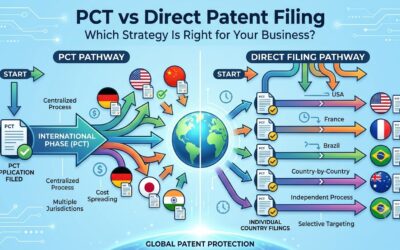
PCT vs Direct Patent Filing: Which Strategy Is Right for Your Business?
Planning to protect your invention internationally? Learn the key differences between PCT and direct patent filing, including costs, timelines, advantages, and strategic considerations. This guide helps startups, innovators, and businesses choose the right international patent filing route based on their commercial goals.

How Patents Are Invalidated: Common Grounds, Legal Process, and Business Implications
A granted patent is often viewed as the ultimate proof of innovation. It gives inventors exclusive rights over their inventions and serves as a valuable business asset. However, obtaining a patent does not mean it is immune from legal scrutiny. A granted patent can...