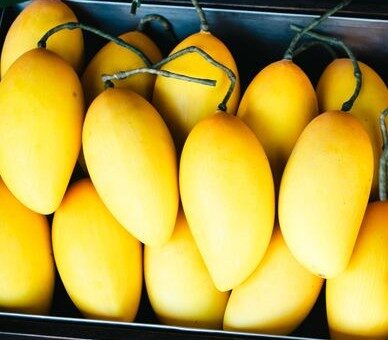
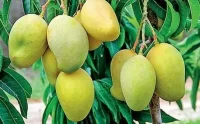
In India, the onslaught of summer is marked with the sweet and luscious happiness of the rich and diverse varieties of mangoes. As temperatures rise across the subcontinent, markets overflow with a dazzling array of varieties, each distinct in colour, texture, and taste. India’s remarkably diverse agro-climatic conditions, spanning tropical coasts, arid interiors, and fertile river valleys, have given rise to some of the finest mangoes in the world. Many of these varieties have earned Geographical Indication status, officially recognising the irreplaceable role of their native regions in shaping their unmatched character and flavour.
Alphonso (Maharashtra)
 GI No.: 139
Date of filing: 22/09/2008
Certification Date: 03/10/2018
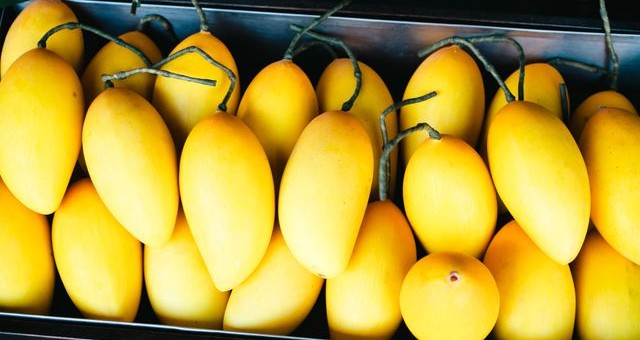
Revered as the “King of Mangoes,” the Alphonso carries a name steeped in colonial history, named after Afonso de Albuquerque, a distinguished military commander and Viceroy of Portuguese India from 1509 to 1515. It was the Jesuit missionaries who introduced the technique of grafting on mango trees in Portuguese Goa, giving rise to this extraordinary variety, and as early as 1563, the botanist Garcia da Orta documented Alphonsos being grown in Portuguese Bombay. Also, affectionately known as Hapoos, Hafus, and Hapus, the Alphonso is cultivated primarily in the Konkan region of western India, as well as in the Valsad and Navsari districts of south Gujarat. A small to medium-sized oval fruit, it ripens to a deep golden yellow skin with an orange tint, and its fiberless flesh delivers an intensely sweet, warm flavour with a gentle citrus-like acidity and a very distinct aroma.
Mango Malihabadi Dusseheri (Uttar Pradesh)
 GI No.: 125
Date of filing: 15/05/2008
Certification Date: 04/09/2009
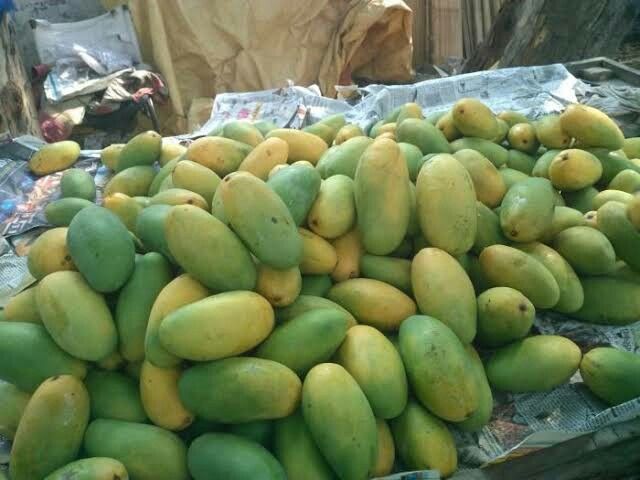
Malihabadi Dusseheri is a heritage mango cultivar from Malihabad, Uttar Pradesh, renowned for its fibreless pulp, rich sweet flavour, and golden-yellow skin. It is distinct from other Dussehri varieties due to the unique soil, climate, and geology of the region, which have preserved its characteristics for over 300 years. Historically linked to the village named Dusher between Lucknow and Malihabad, owned by Lucknow Nawabs, the original mother tree, estimated to be 200–300 years old, still exists in Dusseheri village near Kakori. The variety is typically biennial, thereby bearing fruit every two years. This exclusivity protects the name for mangoes grown specifically in the Malihabad, Kakori, and Bakhi ka Talab tehsils of Lucknow.
Banaganapalle Mangoes (Andhra Pradesh)
 GI No.: 241
Date of filing: 07/09/2011
Certification Date: 03/05/2017
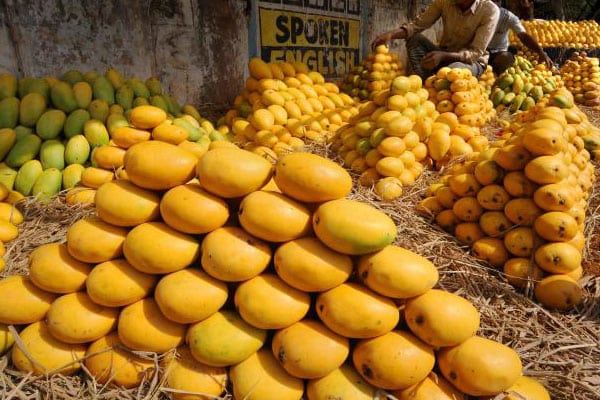
Banganapalle mangoes, also known as Benishan, Chappatai, or Safeda, are a premium Indian mango variety originating from Banganapalle in the Kurnool district of Andhra Pradesh. They are recognized for their obliquely oval shape, golden-yellow skin with light spots, and fibreless, sweet, creamy flesh. The variety derives its name from the village of Banaganapalle in the Kurnool district of Andhra Pradesh, India, where the variety was first cultivated. The name itself is a combination of two words: “Bangan” meaning garden or orchard, and “Phali” meaning fruit, literally translating to “garden fruit.” The peak season runs from mid-May to mid-June, though the season can start as early as April.
Bhagalpuri Zardalu (Bihar)
 GI No.: 551
Date of filing: 20/06/2016
Certification Date: 28/03/2018
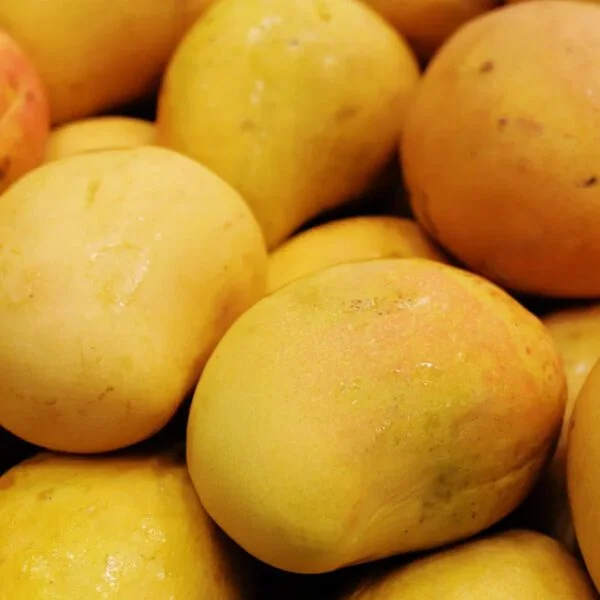
The roots of this variety can be traced back to early 19th century, with the first “mother tree” planted in Tagepur village by Maharaja Rahmat Ali Khan Bahadur between 1810–1820. Its name is derived from the Persian word zard (yellow) or the dried fruit zardalu (apricot) due to its shape. It’s grown in loamy alluvial soil under the temperature of 20°C–25°C, only about 1,500 hectares are dedicated to Zardalu, resulting in an annual production of roughly 10,000 metric tonnes. It usually weighs between 180-300 grams and is known for its royal fragrance. It has a low fibre content and a sugar content of approximately 16%, making it easily digestible.
Malda Khirsapati (Himsagar) Mango
 GI No.: 112
Date of filing: 19/09/2007
Certification Date: 09/09/2008
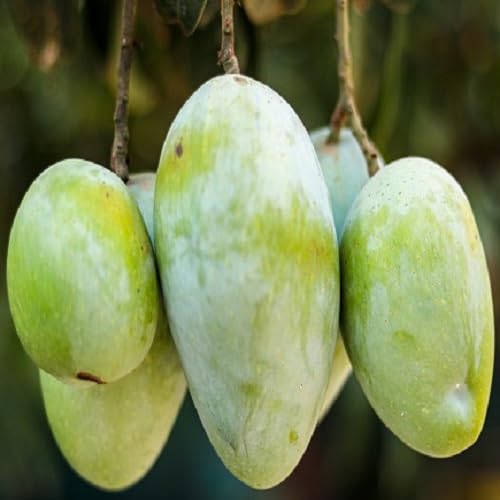
This variety is native to the Malda and Murshidabad districts of West Bengal, India, and parts of Bangladesh. They are locally known as Khirsapati and commercially as Himsagar. It is revered for its fiber-free, melt-in-mouth texture and intensely sweet, honey-like flavor with a Total Soluble Sugar (TSS) content of 16–22° Brix. It is also called the “Champagne of mangoes” in West Bengal as an indication of its believed supremacy over other varieties. Medium to large fruit (250–350g) with an oval shape, thick rough skin that stays greenish-yellow when ripe, and deep orange-yellow flesh. The harvest season usually starts from mid-May and ends in late June.
Laxman Bhog (West Bengal)
 GI No.: 111
Date of filing: 19/09/2007
Certification Date: 09/09/2008
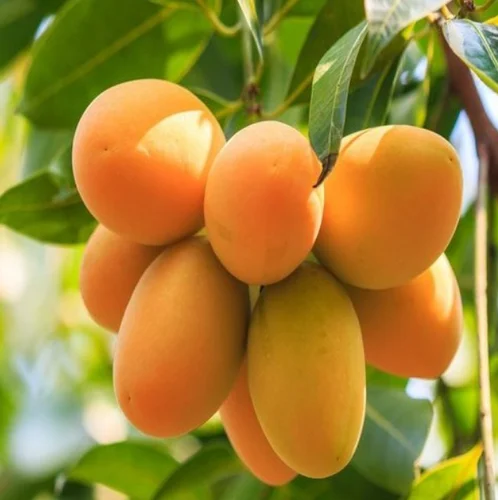
This variety is native to the Malda District of West Bengal, and is known as the “pride of Malda”. It is distinguished by its exceptional sweetness, vibrant orange-yellow skin, and almost fibreless, creamy texture. It features a high free sugar content and a honey-like flavour, making it a popular export alternative to Alphonso mangoes. The harvest period is mid-season, typically ripening in June and July.
Rataul Mango (Uttar Pradesh)
 GI No.: 206
Date of filing: 05/04/2010
Certification Date: 14/09/2021
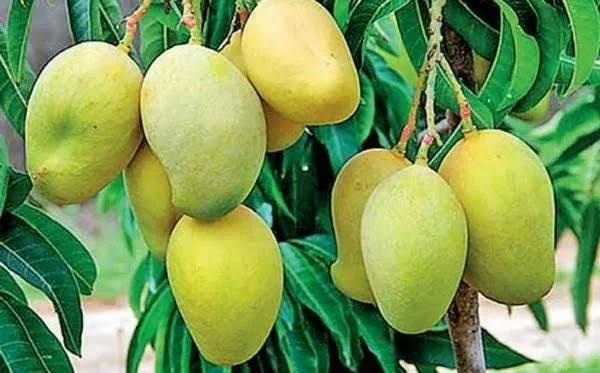
In the early 20th century, Sheikh Mohammad Afaq Faridi grafted a superior sapling he discovered near Rataul, resulting in popularisation of this variety. He established the Shohra-e-Afaq Nursery in 1928 and registered the variety in 1935. This fruit is medium-sized, weighing about 140-220g, with a greenish-yellow skin and ovate-oblong shape. It is prized for its intense floral fragrance and smooth, non-fibrous texture. It was granted Geographical Indication (GI) status on September 14, 2021, protecting its name and ensuring only mangoes grown in the designated Baghpat region can bear the label.
Appemidi Mango (Karnataka)
 GI No.: 13
Date of filing: 04/09/2008
Certification Date: 04/09/2009
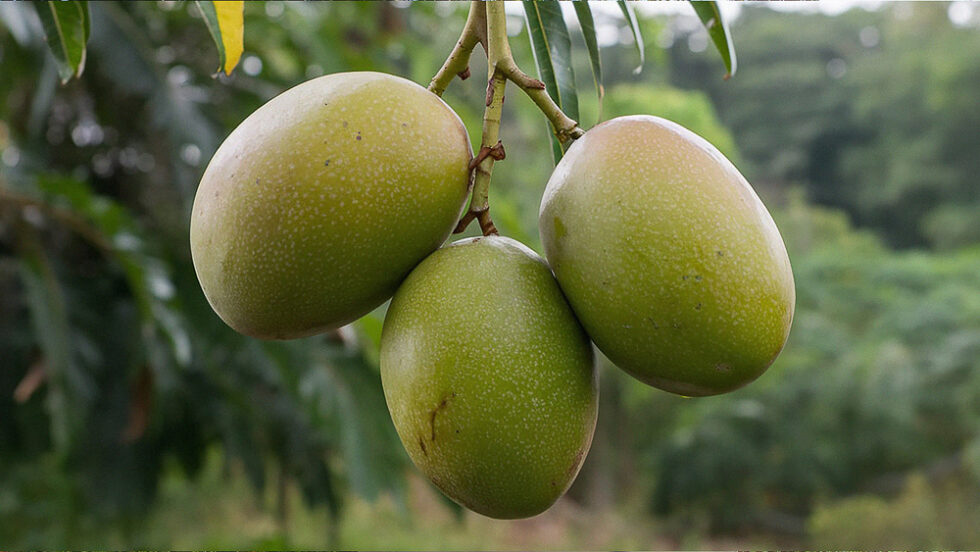
The word ‘Appemidi’ originates from Kannada, Midi means “tender mango”. This variety of Mango is found in the Shivamogga, Uttara Kannada, Dakshina Kannada, Chikkamagalur, Hassan and Udupi regions of Karnataka. Appemidi mango varieties are recognized by their unique aroma and taste, as well as their distinctive colour, shape, size, pulp content, shelf life and harvesting season. Appemidi mangoes are available in a wide range of aromas, varying from that of jeera (cumin seeds) to camphor. The fruits are generally round to oblong in shape. These mangoes are delicate, contain relatively low fibre, and have a sour taste. These mangoes are specially used to make pickle. The variety was awarded the Geographical Indication status tag from the Geographical Indications Registry under the Union Government of India on September 4, 2009.
Gir Kesar (Gujurat)
 GI No.: 185
Date of filing: 10/08/2009
Certification Date: 24/06/2011
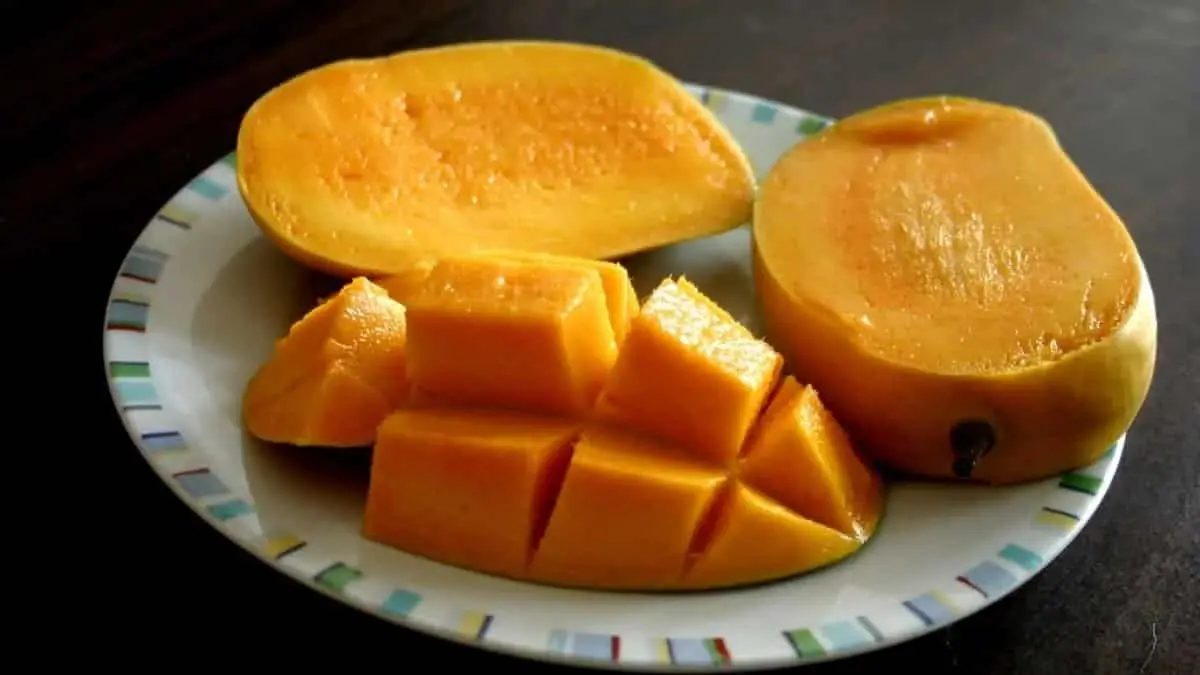
Kesar mango orchards are found in specific areas of the Junagadh region that possess ideal climatic conditions and natural soil conditions for cultivation. The variety was named “Kesar” because of the saffron-coloured pulp of its fruit. The fruit is long, weighing approximately 250-300gm, and has a small beak. The skin is medium thick and accounts for 13% of the total fruit weight. During the development stage, the fruit is deep green in colour and gradually turns yellow with pink spot-on its shoulder upon ripening. The pulp constitutes about 69% of the fruit weight. Gir Kesar mango is renowned for its intense sweetness, with total soluble solids ranging from 18-22° Brix. The mango is versatile in culinary uses and can be enjoyed fresh or used in milkshakes, juices, smoothies, and desserts.
Marathwada Kesar (Maharashtra)
 GI No.: 499
Date of filing: 30/09/2014
Certification Date: 30/11/2016
This variety of mango is founded in the Marathwada region, comprising Aurangabad, Nanded, Parbhani, Latur, Beed, Hingoli, Jalna and Osmanabad districts. Kesar mango contains a higher amount of total soluble solids (TSS), measuring 24° Brix, which is highest among all mango varieties in India. An increase in sugars is accompanied by an increase in TSS; therefore, Kesar mango is considered one of the sweetest mango varieties. The Kesar mango of Marathwada possesses a colour and taste similar to Saffron, which is why it is known as Kesar mango.
Kuttiattoor Mango (Kerala)
 GI No.: 660
Date of filing: 04/09/2019
Certification Date: 14/09/2021
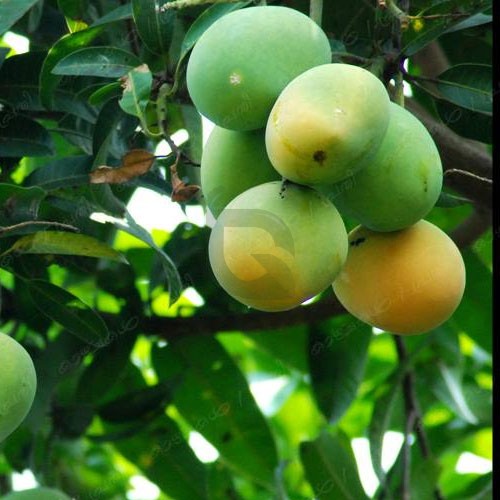
Kuttiattoor Mango (Kuttianoor manga called in Malayalam) is a well-known and traditional mango of Kuttiattoor, Kannur district of Kerala, India. Although this cultivar is most popularly known as Kuttiattoor Mango, it is also referred as Nambiar manga, Kunjimangalam Mango and, Vadakkunbhagam Mango in certain pockets of Kannur district. This Mango is renowned for its appealing orange-yellow colour of its flesh and rind, as well as its excellent taste and flavour. Another notable characteristic is that ripe fruits do not develop speckles or patches on the skin, which enhances their market appeal. The distinctiveness of Kuttiattoor Mango results from the combination of the unique environmental conditions of its cultivation area and its varietal characters. Fruit maturity is at its peak from the last week of March and extends until mid-May. Kuttiattoor Mango trees are long-lived and can remain productive for more than 100 years. The variety was awarded the Geographical Indication (GI) status tag from the Geographical Indications Registry under the Union Government of India on 14 September 2021.
Fazli Mango (West Bengal)
 GI No.: 113
Date of filing: 01/10/2007
Certification Date: 09/09/2008
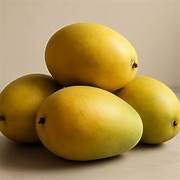
Fazli Mango is a renowned mango variety found in the Malda region of West Bengal. It is known for its rich sweetness, abundant juicy pulp, pleasant flavour and very low fibre content. The Fazli mango season begins at the end of June and continues until the end of July. The fruits are large, weighing approximately 600-100gm each. They contain about 74-75% pulp, while the peel and stone together account for 25-26% of the fruit weight.
Mancurad Mango (Goa)
 GI No.: 728
Date of filing: 14/12/2020
Certification date: 01/08/2023
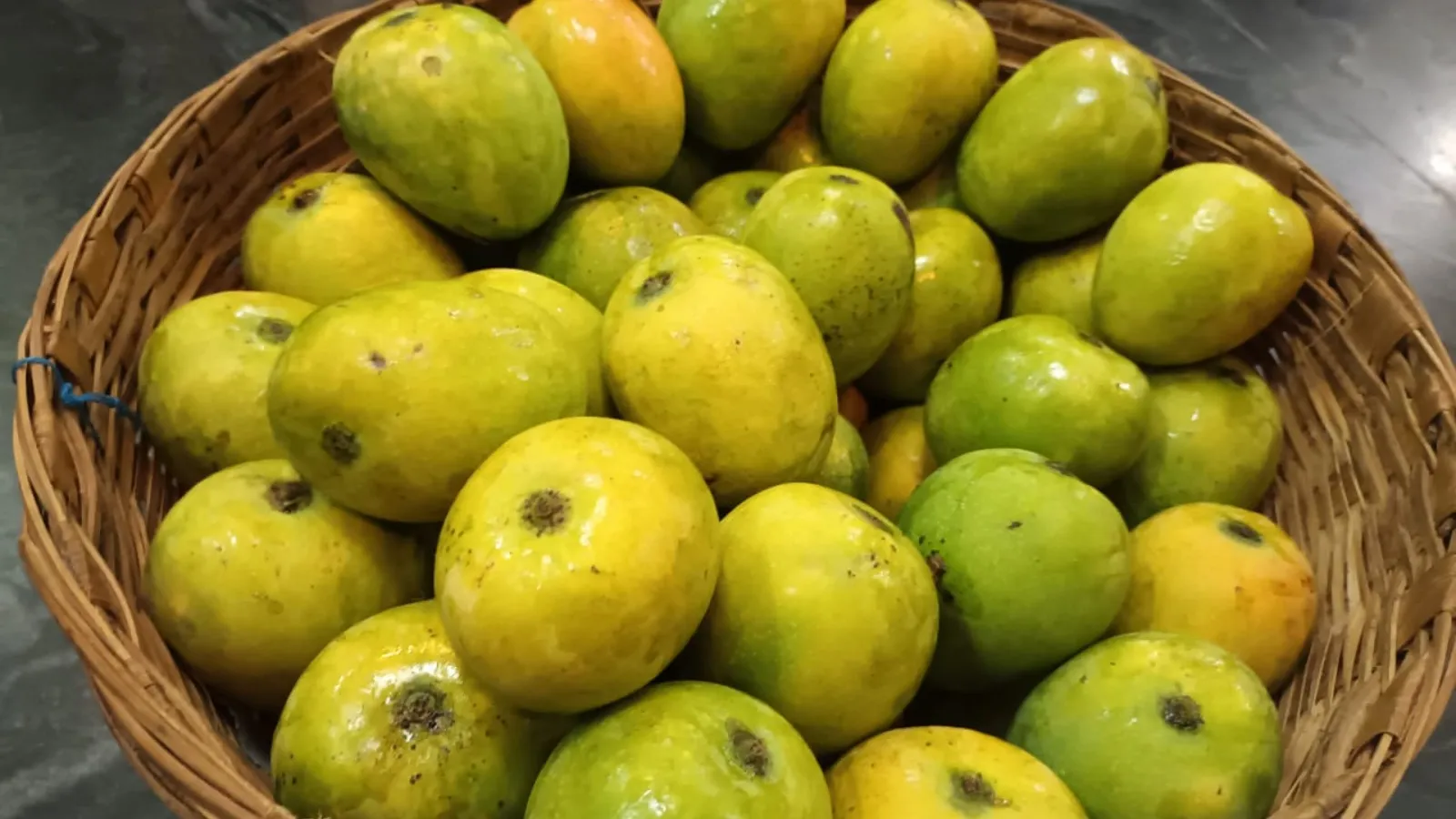
During their rule in Goa, the Portuguese named this mango as “Malcorado” meaning “poorly coloured.” In Portuguese, “Mal” means “bad” and “Cor” means “Colour”. Over time, the name evolved into Mankurad aamo (mango) in Konkani, the official language of Goa. Mancurad Mango is medium to small in size but is highly valued for its juiciness and excellent taste. Compared with other mango varieties, Mancurad Mango commands a premium price in the market. The fruit exhibits an oblong to oval morphology. The skin is initially greenish-yellow, and gradually turns golden yellow upon ripening, often displaying characteristic dotted patterns and an orange-red blush on the shoulders and cheeks. The variety was awarded the Geographical Indication status tag from the Geographical Indications Registry under the Union Government of India on 1 August 2023.
Kari Ishad Mango (Karnataka)
 GI No.: 843
Date of filing: 02/03/2022
Certification Date: 31/03/2023
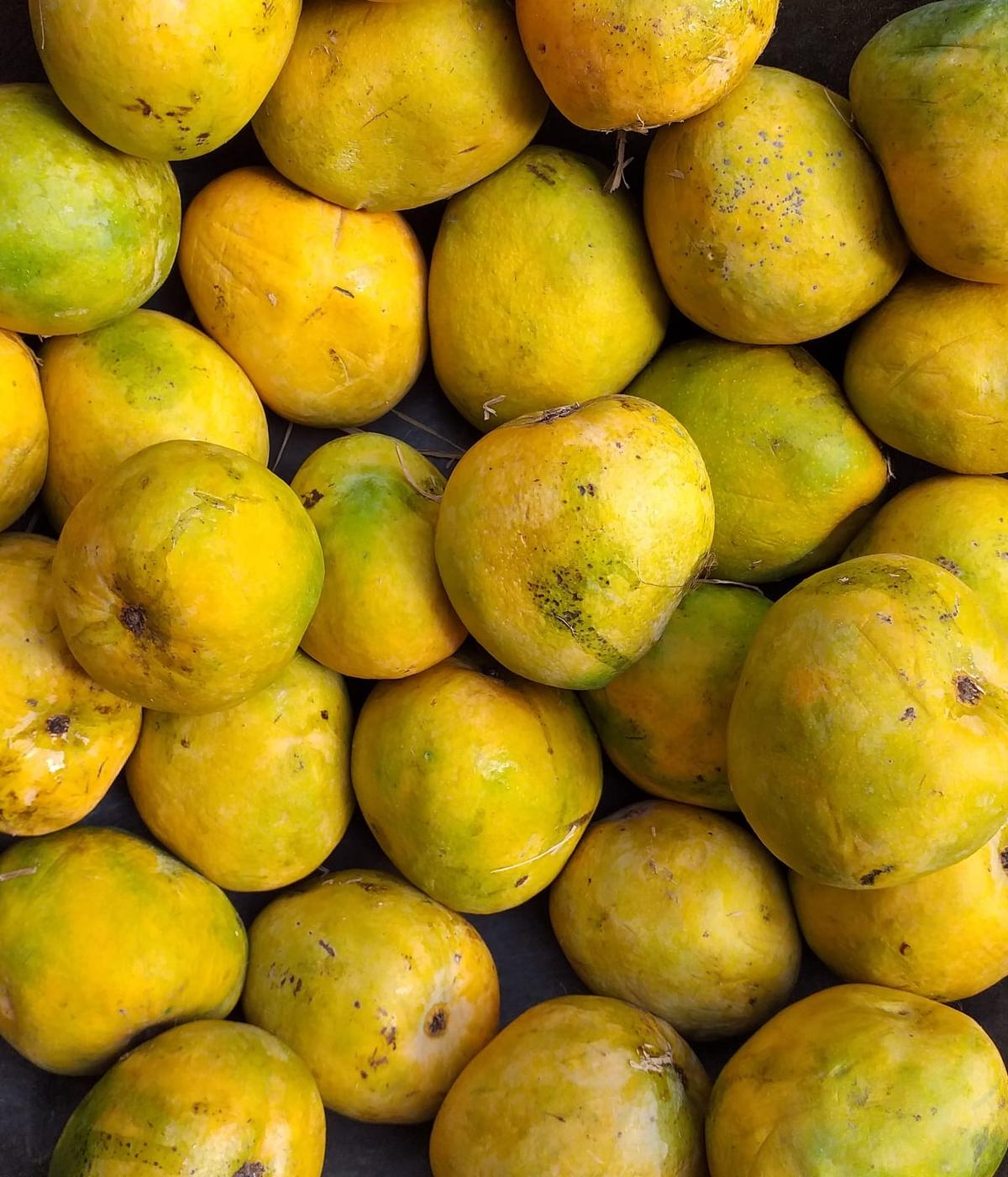
Kari Ishad mango is predominantly grown in Ankola taluk of Uttara Kannada district, Karnataka. This mango has two varieties: Kari Ishad (thin-skinned) and Bili lshad (thick-skinned). It is a fleshy fruit with a small seed. The mango is harvested from mid-May onwards. This fruit typically weighs between 250 and 400 grams, with elite clones reaching up to 477 grams, making it larger than many other mango cultivars. It possesses an oblong shape with a slight curvature and is often described as oblique to oval. The skin is thin and transitions from dark green to nearly black when unripe to a reddish-brown hue upon ripening. Internally, the mango has a high pulp content of up to approximately 70%. The primary drawback of this variety is its short shelf life after ripening. Kari Ishad Mango was awarded the Geographical Indication (GI) status tag from the Geographical Indications Registry under the Union Government of India on 31 March 2023.
Rewa Sundarja (Madhya Pradesh)
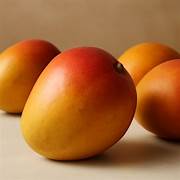 GI No.: 707
Date of filing:
Certification Date:
This is a premium, fibre-free mango cultivar primarily grown in the Govindgarh area of Rewa district, Madhya Pradesh, India. It was developed through cross-breeding by Maharaja Raghuraj Singh in 1885 and it is renowned for its golden colour, sweet taste, and low sugar content making it safe for diabetic patients. The fruit typically weighs between 200–500 grams, has a long shelf life (10–12 days), and retains fragrance even after consumption. While originally confined to Govindgarh orchards, cultivation has expanded to the Kuthulia Fruit Research Centre and other parts of Rewa. This variety was awarded GI on January 31, 2023, making it the first mango from Madhya Pradesh to receive this status.
Banaras Langda Mango (Uttar Pradesh)
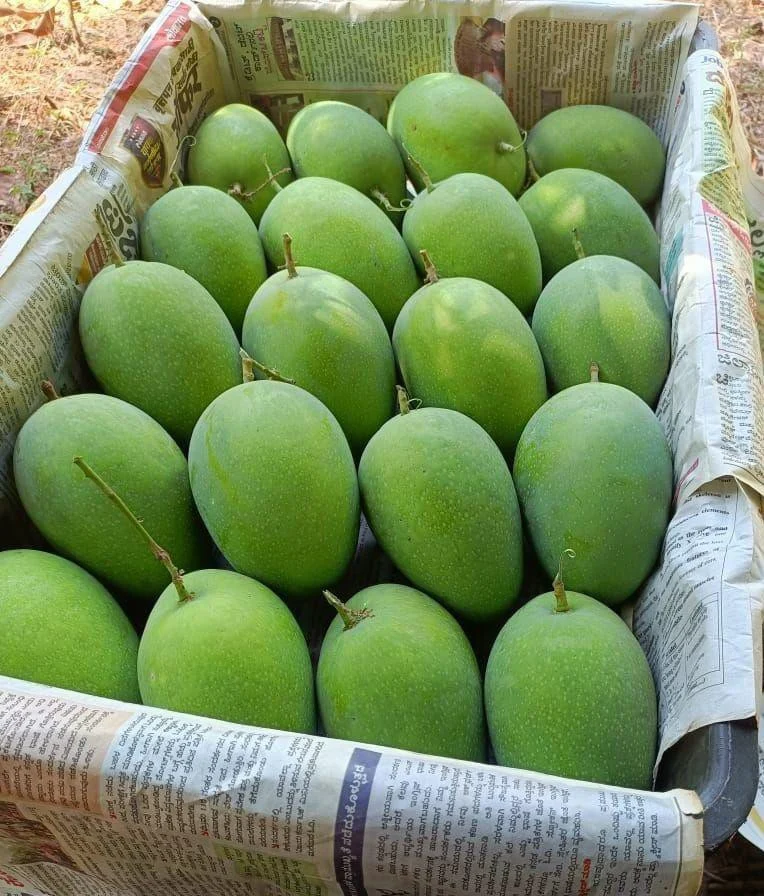 GI No.: 716
Date of filing: 04/11/2020
Certification Date: 31/11/2022
This variety is a renowned cultivar originating from Varanasi, Uttar Pradesh with a cultivation history spanning 250 to 300 years. The folklores tell that the name “langda” is believed to be coined by a farmer who first cultivated the variety or by the handicapped priest (Langda Pujari) who tended the trees at a local Shiv temple. It is distinguished by its medium-sized, ovate shape, fiberless yellow pulp, and unique characteristic of retaining a greenish hue even when fully ripe. These fruits are appreciated for their rich and sweet taste, with subtle soft tones and distinctive aromas, often described as citrus and honey notes. It is grown in over 250 hectares of plantations in Varanasi, producing around 4,500 tonnes annually.
References
https://www.mangodatabase.com/variety-details/3/alphonso
https://www.origin-gi.com/wp-content/uploads/2017/01/93-mango-malihabadi-dusseheri.pdf.
Shailendra Rajan & Pranav Kumar Mishra, Mango Varieties with G.I. (Geographical Indications) in India, Indian Horticulture, July – Aug. 2021, at 12.
Bharat Lal Meena, Suhail Ahmad Khan & Vivek Srivastava, Current Scenario of GI Certified Mango Varieties in India, 67(4) Economic Affairs 681 (2022).
https://www.researchgate.net/publication/233799533_Genetic_diversity_in_unique_indigenous_mango_accessions_Appemidi_of_the_Western_Ghats_for_certain_fruit_characteristics
https://en.wikipedia.org/wiki/Appemidi_Mango
https://grokipedia.com/page/Gir_Kesar
https://en.wikipedia.org/wiki/Kuttiattoor_Mango
https://www.gardenia.net/plant/mangifera-indica-mango
https://gardenoracle.com/images/mangifera-indica.html
https://veliyathgarden.com/products/kuttiattoor-mango-live-plant-2
https://www.nabard.org/gi/GIProductDetails.aspx?Id=49
https://www.gomantaktimes.com/my-goa/art-culture/apart-from-the-famous-mankurad-do-you-know-the-other-mango-varieties-of-goa
https://www.ishs.org/ishs-article/509_25
https://en.wikipedia.org/wiki/Goa_Mankurad_mango
https://grokipedia.com/page/goa_mankurad_mango
https://europub.co.uk/articles/evaluation-of-the-elite-clones-of-kari-ishada-mango-mangifera-indica-l-for-the-morphological-parameters-of-the-fruits-A-222831
https://www.thehindu.com/news/cities/Mangalore/kari-ishad-mango-of-ankola-in-uttar-karnataka-gets-gi-tag/article66899782.ece
https://redearth.in/blog/2023/05/14/kari-ishad-mango-a-seasonal-speciality-found-around-red-earth-resort-in-gokarna/
https://en.wikipedia.org/wiki/Kari_Ishad
https://www.nabard.org/gi/GIProductDetails.aspx?Id=43
https://grokipedia.com/page/kari_ishad
https://www.freepressjournal.in/indore/mp-gets-gi-tag-on-nine-things-including-rewas-sundarja-mango