May 21, 2026 | Innovation in Business, Trademark
Introduction
Advertising is a marketing and promotional tool used by businesses to communicate information about their goods and services to consumers. Through advertisements, companies seek to build brand recognition, influence consumer preferences, and distinguish their products from those of competitors.
Among the various forms of advertising, comparative advertising has emerged as one of the most debated marketing practices. Comparative advertising refers to a form of promotion in which a business compares its products or services with those of a competitor to amplify the superiority or advantages of its own products. Such comparisons may relate to quality, pricing, performance, features, or efficiency. While proponents argue that comparative advertising promotes healthy market competition and helps consumers make informed purchasing decisions, it also raises important legal and ethical concerns.
The primary concern arises when the comparison goes beyond legitimate competition and results in disparagement of a competitor’s goods or misuse of its trademark. Comparative advertisements raises legal concerns when they contain false or misleading statements, distort facts, or unfairly tarnish the reputation and goodwill associated with a competing brand. In such situations, the use of a competitor’s registered trademark or a deceptively similar mark in the course of advertising can amount to trademark infringement and product disparagement.
Therefore, the legality of comparative advertising depends upon maintaining a balance between commercial free speech and the protection of trademark rights and business goodwill.
What is Comparative Advertising?
Comparative advertising is a marketing strategy in which a business compares its products or services with those of a competing brand to highlight the advantages or superiority of its own offerings. The purpose of such advertising is to attract consumers by highlighting distinctions in quality, price, performance, durability, or other commercial features.
Comparative advertising can broadly be classified into two categories:
- Direct Comparative Advertising
Direct comparative advertising refers to a form of advertising in which a business expressly identifies a competing brand while comparing products or services. The competitor may be identified through the use of its brand name, logo, packaging, trade dress, slogan, or other distinctive elements associated with the brand.
- Indirect Comparative Advertising
Indirect comparative advertising refers to a form of advertising in which a business compares its product with that of a competitor without expressly naming or directly identifying the competing brand. Instead, advertisers use elements such as similar packaging, colour combinations, slogans, product designs, or other recognizable features to subtly suggest the identity of the competing product.
When Does Comparative Advertising Become Trademark Infringement?
Comparative advertising is recognised as a permissible form of advertising in India, provided that the comparison is truthful, fair, and non-deceptive. Such advertising is allowed because it encourages market competition and enables consumers to make informed purchasing decisions.
When comparative advertising involves the use of a competitor’s trademark, it must aim to strike a balance between commercial free speech and trademark protection. Under the Trade Marks Act, 1999, the owner of a registered trademark enjoys exclusive rights to use and protect the mark in relation to its goods and services. Consequently, unauthorized or unfair use of another business’s trademark in advertising may give rise to claims of trademark infringement and product disparagement. Section 29 of the Trademark Act, 1999 prohibits unauthorized use of a registered trademark in a manner that takes unfair advantage of, dilutes, or harms the reputation and distinctive character of the trademark. While Section 30 provides certain exceptions by permitting the use of another person’s trademark for the purpose of identifying goods or services, provided such use is honest, fair, and does not unfairly exploit or damage the trademark’s reputation.
A comparative advertisement may become unlawful in the following situations:
- False or Misleading Claims
When an advertisement contains exaggerated, false, or unsubstantiated claims that portray a competitor’s product negatively, it may amount to trademark infringement and unfair trade practice. Misleading advertisements can damage the goodwill and reputation associated with a competitor’s trademark and may misinform consumers.
- Disparagement of a Competitor’s Product
Indian courts have consistently held that while a business is entitled to praise its own products, it cannot ridicule, denigrate, or disparage the goods of a competitor. Any advertisement that portrays another brand as inferior, unsafe, ineffective, or undesirable without proper justification may amount to product disparagement.
- Tarnishment of Trademark Reputation
A trademark embodies the reputation and goodwill of a business. If comparative advertising harms the distinctiveness, reputation, or commercial value of a competitor’s trademark, such use may be considered infringing and actionable under trademark law.
Therefore, Indian law permits comparative advertising only to the extent that the comparison remains truthful, factual, and non-disparaging.
Why Trademark Protection is Important for Businesses
A trademark is one of the most valuable intellectual property assets of a business. It represents the goodwill, reputation, and distinct identity associated with a brand. In today’s competitive market environment, businesses invest substantial resources in developing and protecting their trademarks.
Misuse of trademarks in comparative advertising can adversely affect consumer trust, brand value, and market reputation. Trademark protection, therefore, becomes essential to prevent unauthorized use, dilution, infringement, and disparagement of a brand’s identity.
Obtaining trademark registration also strengthens a business’s ability to initiate legal proceedings against misleading advertisements and unfair commercial practices that damage brand goodwill.
Things to Keep in Mind While Engaging in Comparative Advertising
Businesses adopting comparative advertising as a marketing strategy should exercise caution to ensure compliance with trademark laws and advertising standards.
- Ensure Claims are Supported by Evidence
Claims relating to quality, pricing, performance, or efficiency should be accurate and supported by verifiable evidence.
- Use Competitor Trademarks Only Where Necessary
A competitor’s trademark should only be used for identification purposes and must not create confusion, deception, or dilution of the mark.
- Avoid Disparaging Content
Advertisements should not mock, ridicule, insult, or unfairly attack a competitor’s products or brand image.
- Avoid Misleading Consumers
Comparative advertisements should present facts clearly and honestly without exaggeration or concealment of material information.
- Seek Legal Review Before Publication
Businesses should obtain legal review of comparative advertisements prior to publication in order to minimise the risk of trademark infringement and product disparagement claims.
Planning a comparative advertising campaign?
Ensure your advertisements remain compliant with trademark laws and avoid potential infringement risks. Connect with Origiin IP Solutions LLP for trademark advisory and IP protection support.
Author: Megan (Legal Intern, Origiin IP Solutions LLP)
This article was prepared during the internship programme under the guidance of the Origiin team.
Jan 13, 2025 | Innovation in Business
 Living in the hills inspires Kanav Vaidya to create a unique range of natural and healthy products. The Himalayas inspired him to create a health food brand that emphasizes sustainability and natural ingredients.
His company, Himalayan Gatherer, incubated at BIC- HPU, recognised as a start up by GOI under Start up India, is highly committed to promoting healthy eating habits with minimal change to the raw product, thus respecting nature and the environment to bring nature’s gift as food to the world.
His vision for sustainability and conservation in the Himalayas and love for the bounty of the mountains encouraged the duo to embark on an entrepreneurial adventure. Himalayan Gatherer is a brand dedicated to providing natural and healthy food products sourced from the Himalayan region.
In this episode of Inspiring Tales with Bindu, you will know more about the entrepreneurial journey, passions, and challenges of Kanav Vaidya in building Himalayan Gatherer.
The interviewer, Bindu Sharma is Founder and CEO of Origiin IP Solutions LLP, a leading IP and legal services provided firm.
Bindu: Thanks for accepting the invite to participate in this program, “Inspiring Tales with Bindu”.
Bindu: As the world becomes increasingly health-conscious, your business beautifully connects this trend with traditional heritage. What inspired you to start your business in this sector? Readers are eager to learn about your journey.

Kanav: Before incorporating Himalayan Gatherer, I was working in the hydro power sector which gave me an opportunity to travel across Himachal Pradesh, especially the remote areas of the state. I saw people deeply connected with the nature in all aspects, living a very healthy and happy life. It was a rather great learning experience for me to be with them and spend time with nature. The food habits of city dwellers really gave me nightmares; mostly because the available food is mostly loaded with chemicals. Thus, the idea to create Himalayan Gatherer came to my mind and today, we are growing all natural, healthy and pure products.
Crafting handmade products transcends mere culinary production. It embodies the artisan’s dedication to their craft, their reverence for nature’s gifts, and their commitment to creating products that speak of authenticity and quality. The process is a dance between tradition and innovation – a fusion of time-honoured methods and modern sensibilities. It’s a reminder of the beauty that emerges when human hands and nature’s bounty collaborate to create something truly special.
Bindu: Can you tell us more about your e-commerce platform and how you aim to bring recognition to the health benefits of traditional Himalayan products?
Kanav: Absolutely! Our e-commerce platform is designed to showcase the rich diversity of traditional Himalayan products, emphasizing their health benefits and cultural significance. We curate a selection of items ranging from all natural breakfast supplies to superfoods, all sourced from local communities committed to sustainable practices.
Our aim is to educate consumers about the nutritional advantages of these products, such as their antioxidant properties and potential health benefits. We incorporate detailed descriptions, health articles, and recipes to enhance understanding and inspire people to integrate these items into their diets.
Additionally, we work closely with local producers, micro businesses ensuring fair trade practices and supporting the livelihoods of Himalayan communities. By leveraging digital marketing and storytelling, we hope to raise awareness and recognition for these valuable products, creating a bridge between ancient wisdom and modern wellness.
Bindu: What is your approach to working with local communities in the region to source your products? What are the core challenges to procure the right products and maintain the quality of the products.
Kanav: My approach to working with local communities in the region revolves around collaboration and respect. I prioritize building strong relationships with local farmers, producers and micro enterprises, ensuring that they are actively involved in the sourcing process. This not only empowers them but also fosters a sense of ownership and pride in their products.
One of the core challenges in procuring the right products is ensuring consistency in quality. The Himalayan region can have varying climates and conditions, which can affect yield and quality. Thus, we follow a principle of minimal change to the actual product.
Another challenge is the logistics of sourcing, given the remote locations. We work on establishing efficient supply chains that respect both the environment and the local communities.
Overall, our commitment is to create a sustainable model that benefits both the producers and consumers, while preserving the unique heritage of Himalayan products.
Bindu: How do you ensure product quality especially when you claim your products to be natural and non-GMO?
Kanav: Our primary focus is on curating products which are not commercially farmed and to source from regions that are remote and not impacted by commercial farming and hence our products are better than just being organic. For example, in our pickles, the main ingredient, fiddlehead fern, is not farmed, but it grows wild during the rainy season. Similarly, our ghee comes from high altitude region where due to the harsh climatic conditions only the native cow survives. We literally must walk uphill for 2 hours to reach the source village. Also as mentioned earlier we make minimal changes to the natural state of the products, for example, the fiddle head ferns are preserved in apple vinegar which is made in-house.
Bindu: You incorporated your company during Covid time. During your initial days, how difficult or easy was to get business, B2B or B2C? Which marketing and selling strategies work best for you?
Kanav: Our start was slow not just because of the pandemic, but also because we were figuring out a lot. Initially I think we had beginners luck, especially B2B. We started getting B2B orders from multiple cities. Some turned out to be fruitful and a few were scams but it was a good learning experience for us. B2C was really slow, because of the tedious listing processes of multiple e-comm portals, such as Amazon. We had an almost negligible marketing budget to start with, so cold emails for B2B connections, barter influencers, word of mouth, using personal contact – all these helped us in the beginning. Even today, word of mouth is one of the best selling points for us. One customer connects more customers. We are constantly improving our own website, like linking rewards to purchases and/or referrals. Its an ongoing process.
One thing is for sure – whether its digital mediums or your regular brick and mortar stores, “Jo dikhta hai, vo bikta hai” (“What is seen, is sold”).
Bindu: For any business, customer satisfaction is very critical, and I am curious to know what is your Unique Selling Point (USP)?
Kanav: Our Unique Selling Point (USP) lies in our commitment to authenticity. We focus on providing traditional Himalayan health foods that are deeply rooted in the cultural heritage of the region. Our products are carefully curated to highlight the nutritional benefits of Himalayan superfoods, backed by traditional knowledge and modern research. We educate our customers on how these foods can enhance their well-being.
Beyond just selling products, we offer recipes, health tips, and stories about the culture and practices behind our foods, creating a holistic experience that connects customers to the Himalayan lifestyle.
Bindu: What’s one question you wish people would ask you about business, but don’t? What would be your answer?
Kanav: One question I wish people would ask is: “What motivates you to keep pushing through the challenges of entrepreneurship?”
My answer would be that my motivation stems from a deep passion for health and sustainability, as well as a desire to make a positive impact. Each challenge presents an opportunity to learn and grow, not just as a business owner, but also as a member of the community as the hills are my home and I think they have accepted me as their own.
Seeing the benefits our products bring to consumers and knowing that we’re supporting micro enterprises, small farmers and preserving traditional practices keeps me driven.
Sharing the knowledge, learning from the natives and teaching them what we know is a major factor to keep me going.
We were lucky enough to have opportunities to share details about how to run a business with a few young farmers and it gives me a great joy to see that now they are selling their own produce in posh tourist areas and earning a decent living. We have so much to share within this community and doing so gives me a sense of great pride and fulfilment.
Bindu: While running a business, one has to manage a lot of things and keep a stable mind. How do you keep yourself motivated?
Kanav: Oh! Like everyone else there are good and bad days.
Work keeps me motivated, the sense of doing something, a sense of responsibility towards others, communicating, learning and teaching keeps me motivated.
The best part is the beautiful surroundings, clean air, clean water and good company keeps me going. And of course it’s always easy to find some my time here.
Bindu: What was your background before starting this business? Are you happy with what you are doing? Do you have any regrets?
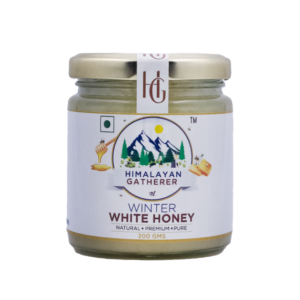 Kanav: Before Himalayan Gatherer, I ran a hydro turbine company for about 12 years, which gave an opportunity to connect with the mountains. Otherwise, I would never have travelled to places where I have been now. Yes, for sure, I am happy. I’ve always been happy with my work whether it was my previous work or Himalayan Gatherer.
The only regret I have is that sometimes the relaxed atmosphere slows you down, but then again no happy moment is wasted time. At this moment, I do not have any regrets. I was not built to live in big cities, though I’ve lived in Bangalore, and travelled extensively across India. These cities are great, but I am not meant to live there. For me Himachal is home by default, but for work it’s the best thing which happened to me. Like we say “Janmabhoomi and Karmbhoomi” – both are here.
Bindu: Who has been your role model and why?
Kanav: Nature, yes nature has been my role model. I’ve never read about or heard about other people’s life like the big guns / top brass of any industry because I believe that it makes a sub conscious impact on ones thinking capabilities.
I like to learn from nature, how life flows and moves. How life brings you to crossroads and how one has to make an individual decision. So yes nature has been my role model, it inspires me, it makes me calm, it moves me and it makes me to do things I could never have imagined.
I remember a dialogue from a movie which said, though in a much better poetic way that; “everyone has to write his/her own story. “
Bindu: At the end I would like to know how did you come up with the business name “Himalayan Gatherer“ and what does your logo represent?
Kanav: Ah!, we were pondering about the name and because we knew that we would be gathering most of our products and that too from a defined region thus it came in simple- “Himalayan Gatherer”. Our logo represents our name – farmers gathering in the Himalayas or gathering the produce.
Bindu: What is one piece of advice you would give to budding entrepreneurs or new businesses?
Kanav: It would be for all, take life easy, make a commitment to yourself, enjoy your work, be happy.
Bindu: Thank for very much Kanav for sharing your Inspiring Tale. I am sure it will inspire a lot of young entrepreneurs.
Kanav: You are most welcome Bindu. It was lovely to have this conversation with you.
To know more about Himalayan Gatherer and order the products, please contact Himalayan Gatherer Team here:
Shop: http://shophg.in/
Email ID: info@himalayangatherer.in
Company name: Himalayan Gatherer Traders and Makers LLP
Linkedin: Kanav Vaidya
Use promo code ITB2024 to avail 10% discount.
Nominate yourself HERE to publish your story.
Please contact us at info@origiin.com to know more about our services (Patent, Trademark, Copyright, Contract, IP Licensing, M&A of companies)
Subscribe to YouTube Channel HERE
Join LinkedIn Group: Innovation & IPR
WhatsApp: +91 74838 06607
Dec 16, 2024 | Innovation in Business
 Emozo is a Do-It-Yourself research and feedback gathering platform that’s focused on helping brands collect high quality emotional and behavioural data from audiences, in response to digital stimuli of different kinds. This is important because 95% of all decisions on the digital channels are driven by emotions. Unless one understands how one’s content resonates (emotionally) with one’s audience, driving the desired outcomes (via said content) may be problematic.
With Emozo, one does not need to depend on behavioural scientists, data analysts, software engineers to collect and decode this data from a global audience. The platform does it all. You can sit in your location and launch studies anywhere in the globe and collect reliable data in a matter of days. All the respondent needs is a camera enabled, connected digital device. Reports are produced in minutes, and one doesn’t have to wait for weeks to get feedback.
Emozo may be used to:
- Inform your intuition with valuable data and make the right calls;
- Get great insights into likely in-market behaviour before you commit to a big production and/or media decision;
- Compare and contrast across multiple candidates to ascertain which is likely to work best with your audience;
- Get feedback on any type of digital content (videos, images, streaming media, application interfaces, etc.); and
- Leverage pre-built templates for quick survey launches and retain your own survey data control.
Built on real science and proven mass communication theory, our fully secure, digital platform leverages the powers of AI to enable qualitative research at scale and with speed. We are built to support all forms of iterative design-development and test & learn processes. Our proprietary ACE framework triangulates data on Appeal, Commitment, and Engagement to shed light on how customers feel about brands and experiences. The end result is meaningful info that establishes robust connections to human behaviour.
 On the surface, we are a Market Research Services company that uses its own proprietary software platform to deliver breakthrough results for our customers. Ours is a full-fledged survey platform in the lines of Survey Monkey etc. Our clients have the option of using us for plain vanilla surveys of all kinds (without collecting any attention and emotion data). We provide Consulting services for customized study design and execution when our clients need us to.
Some of the kind of work that we do, include:
| Advertising Effectiveness Studies |
Content Strategy Analysis |
| Brand Messaging Testing |
Influencer Marketing Research |
| Brand Health Tracking |
Product Development & Testing |
| Market Segmentation |
Customer Satisfaction Surveys |
| Customer Journey Mapping |
Customer Feedback Surveys |
To know more about Emozo and book a demo session, please contact Emozo Team here:
Email ID: indranil@emozo.ai
Company name: Emozo Labs, Inc.
Phone number: +1 (519) 807-3026
Linkedin URL: www.linkedin.com/in/indranil-mukherjee-a4347a1
Use promo code ITB2024 to avail 10% discount.
Nominate yourself HERE to publish your story.
Please contact us at info@origiin.com to know more about our services (Patent, Trademark, Copyright, Contract, IP Licensing, M&A of companies)
Subscribe to YouTube Channel HERE
Join LinkedIn Group: Innovation & IPR
WhatsApp: +91 74838 06607